01 / 11What we believe
An AI transformation, not a tool rollout.
Most firms get far less from AI than they could, for three reasons. They stop at buying tools. They add chat to the old way of working. They count usage, not value.
The value goes to firms that redesign how work gets done.



02 / 11Where firms are
Most firms are stuck at L1, buying tools rather than outcomes.
L1 and L2 add tools. The value is in L3 and L4, where the work changes.
Felt gains outrun real ones. Experienced developers in one trial felt about 20% faster but measured 19% slower, and 95% of enterprise gen-AI pilots show no measurable P&L return.
Sources: METR, July 2025 RCT, 16 experienced developers, 246 tasks, early-2025 tools (a late-2025 rerun found speed-ups, on weak evidence); MIT NANDA, The GenAI Divide, August 2025; Levels: qubit.
| Level | What it looks like |
|---|---|
| L1 Assist (most firms today) | Chat for everyone; meeting notes summarised. |
| L2 Capture | A team second brain; one-off tools per function. |
| L3 Delegate | Custom agents, and a team chief of staff running loops. |
| L4 Operate | Agents across teams on a living knowledge base, with dynamic reporting. |
| Felt | 20% faster |
|---|---|
| Measured | 19% slower |
03 / 11Why tools alone fail
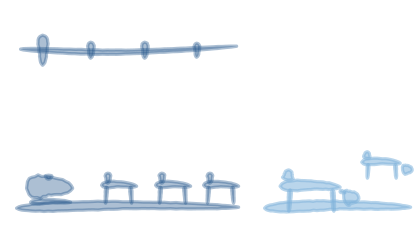
A new motor on the old shaft changes little.
Factories that bolted an electric motor onto old line shafts gained little for decades. The gains came when work was redesigned around a motor on every machine.
Web-native firms beat incumbents who put paper forms online. Chat tools are today's bolted-on motor.
Sources: Paul David, The Dynamo and the Computer, 1990; Warren Devine, From Shafts to Wires, 1983; Borders ran its web store through Amazon from 2001 to 2008 and filed for bankruptcy in 2011.



04 / 11The prize
Around 60% of the knowledge-work week is work about work.
Chasing, formatting, searching, minutes and status updates. We call it the structuring tax: fuzzy, repeatable work that code never could take on, and AI now can.
Aim to cut it by two-thirds, not trim the edges. The time freed goes to skilled and strategic work.
Sources: Asana, Anatomy of Work Index 2021, n > 13,000 knowledge workers (the 2023 index put it at 58%); The cut from 60% to 20% is an illustrative aspiration.
| Kind of work | Today | AI-native aspiration |
|---|---|---|
| Work about work | 60% | 20% |
| Skilled work | 26% | 50% |
| Strategic work | 14% | 30% |
05 / 11Who does the work
Two questions decide who, or what, should do the work.
Would ten competent people produce the same output? Does someone answer for it to another person? The answers place work on a stack: people, frontier model, fast model, code.
As judgement is captured, work moves down, and each step down is cheaper and more predictable.
| Work | Divergence | Accountable to a person | Who does it | Examples |
|---|---|---|---|---|
| AI does it, checks prove it | Convergent | Yes | Code and checks | Reconciliations, figures that must tie |
| The human frontier | Divergent | Yes | People | Pricing, board calls, client relationships |
| AI just does it | Convergent | No | Fast model and code | Formatting, minutes, scheduling, filing |
| AI drafts, a person picks | Divergent | No | Frontier model | First drafts, research synthesis |
| Human judgement | Divergent, accountable calls; sets the taste |
|---|---|
| Frontier model | Synthesis, drafting and sparring |
| Fast model | Typed calls: triage, routing, escalation |
| Code | Rules: layout, tie-outs, calendar constraints |
06 / 11Our approach
An environment, not a tool: a stock and a flow.
The stock is what the firm knows, believes and has decided. The flow is every request, from intake to approved output.
Each piece of work reads from the stock and writes back what it learned. A ledger records its time, cost and outcome.
| Flow | Every request, from intake to approved output: Intake, then Route by stakes, then Render and approve. |
|---|---|
| Stock | What the firm knows, believes and has decided. |
| Between them | Each piece of work reads context from the stock and writes back what it learned. |
07 / 11The end state
The firm runs on judgement, not coordination.
Agents build the pages and draft the updates. People frame the work, check it and make the calls.
In an illustrative four-person boutique, the same team runs 18 engagements a year instead of 12, and its effective hourly rate rises from $100 to $160.
Sources: Illustrative: four people, about 7,200 working hours a year, a $60k average engagement today, about 7% more per engagement on fixed fees, and demand for the extra capacity assumed; effective hourly rate is revenue divided by hours worked.
| Measure | Today | AI-native |
|---|---|---|
| Engagements a year | 12 | 18 |
| Effective hourly rate | $100 | $160 |
08 / 11Value, not usage
Count realised productivity, not token use.
We track every initiative through stage gates, from idea to value booked in the P&L. Most firms buy a tool, skip the redesign and count usage as success.
In the illustrative boutique, one two-week sprint drops from 150 team hours to 100.
Sources: Stage gates: qubit, adapted from transformation value tracking; sprint hours are illustrative: four 150-hour sprints make a 600-hour engagement, and saving 50 hours a sprint fits 18 engagements into the year, not 12.
| Today | 150h |
|---|---|
| Pages | 20h saved |
| Analysis | 14h saved |
| Coordination | 10h saved |
| Rework | 6h saved |
| AI-native | 100h |
| G0 | Idea |
|---|---|
| G1 | Sized |
| G2 | Validated |
| G3 | Planned |
| G4 | Live |
| G5 | Realised |
09 / 11How we work
Two engines, one flywheel.
Engagements redesign how a firm works, for a base fee plus a share of the value booked. The environment stays behind, holding the firm's playbooks and checks.
Patterns that repeat across firms make the environment better, so each new engagement starts further up the stack.




10 / 11Company zero
We run qubit on it first.
qubit runs on the agents and VG we build for clients. A typical transformation takes a firm from L1 to L4 in six months.
Source: Typical qubit engagement; length varies by firm.
| Month | Gate | What happens | Level |
|---|---|---|---|
| M1 | G0–G1 | Work sized, baseline set | L1 Assist |
| M2 | G2 | Three work types piloted | L2 Capture |
| M3 | G3 | Roles, authority, pricing | L3 Delegate |
| M4 | G4 | Live in the environment, measured | L3 Delegate |
| M5 | G4 | Live in the environment, measured | L4 Operate |
| M6 | G5 | Uplift booked | L4 Operate |
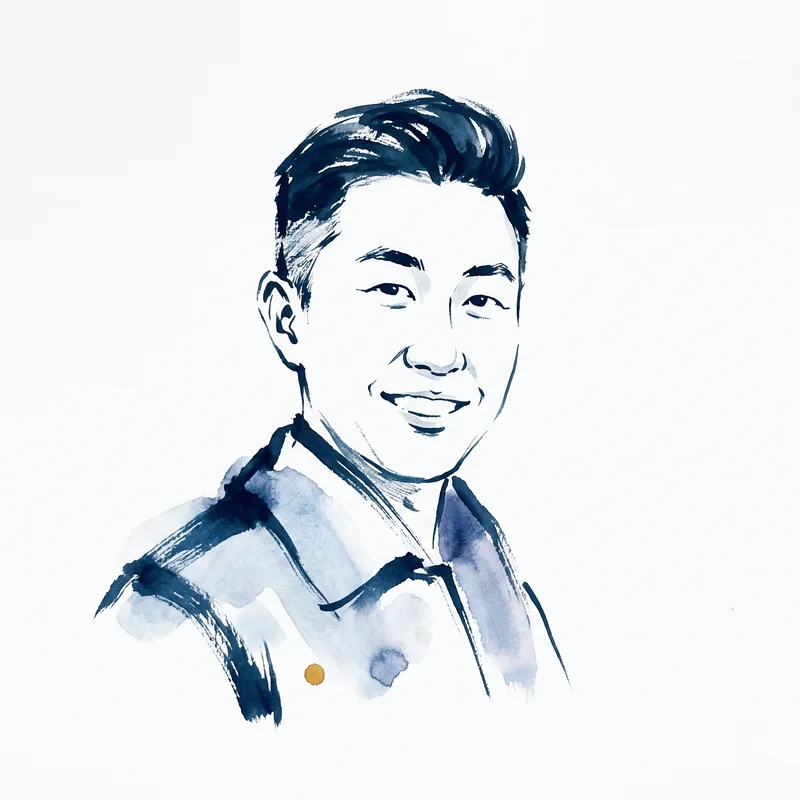 Lucas Zhu
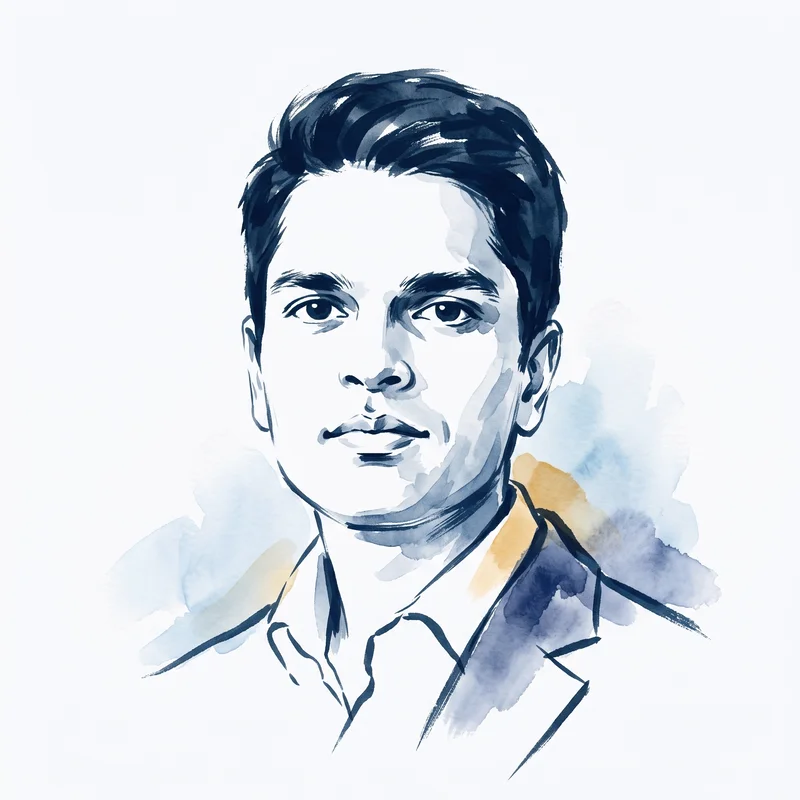 Nick Pinidiya
11 / 11Next step
Let's talk about where your firm's time goes.
Tell us what you hope to change, and one of us will reply within two business days.